
A business letter has always been one of the most reliable types of professional communication. A well-constructed letter is weighty even in a digital world and credible. It has the transparency of thought and respect for the recipient. Most professionals know that communication is important, but they are not sure of how to format it. Details are usually powerful impressors of the small things. The overall effect is brought about by margins, spacing, tone and structure. Whenever all the elements are put in place, the message will be easier to read and comprehend. It is not complicated to learn the format. It merely needs focus on organisation and coherence.
Sender’s Address
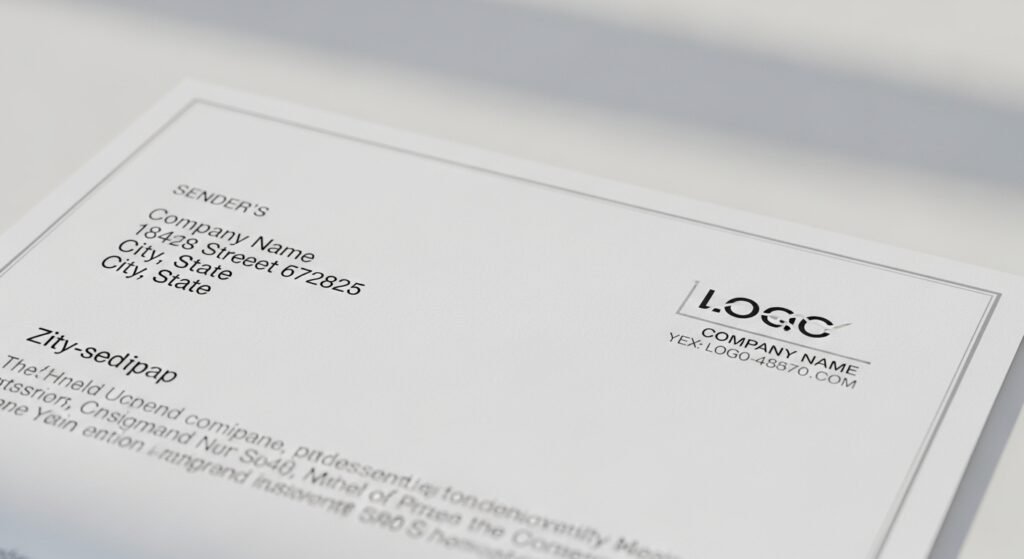
The sender’s address has the letterhead above. It fills in the street, city, state and ZIP code. Contact details ought to be updated and precise. This part enables the recipient to reply without confusion and delay.
Date Line
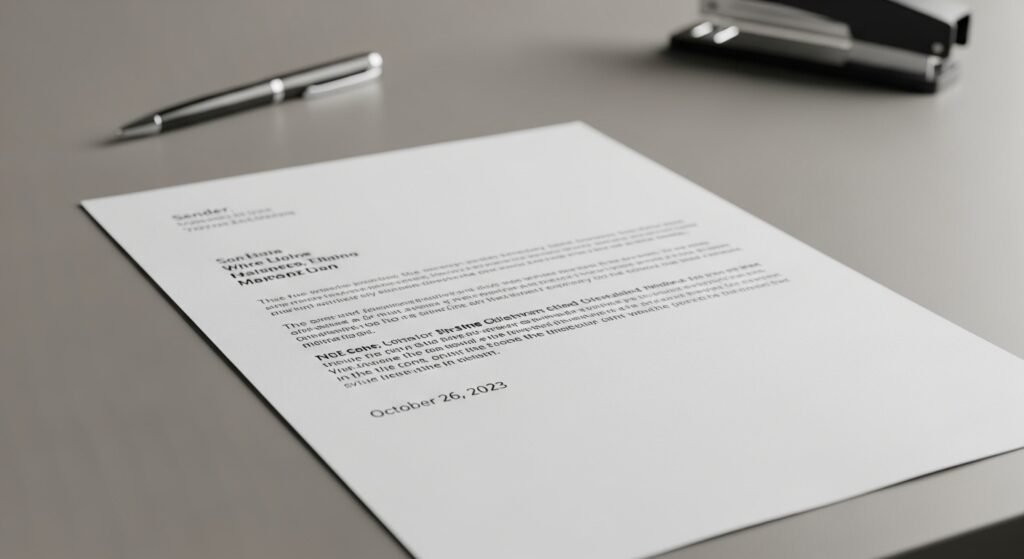
Under the address of the sender is the date written. It must be expressed in detail in order not to be misunderstood. The date gives a definite point of reference. It assists the two parties in monitoring communication documentation in a systematic way.
Recipient’s Address
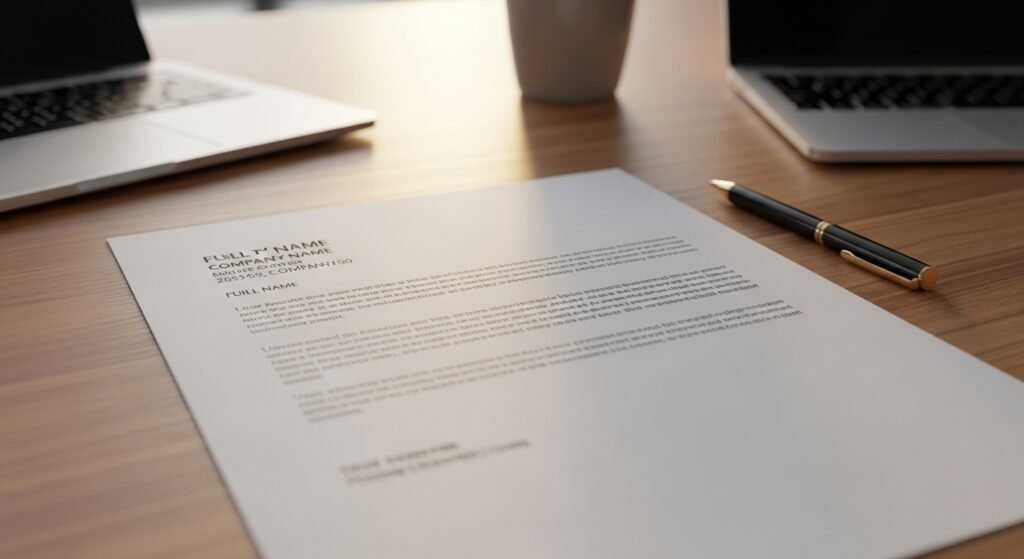
The address of the recipient will come after the date. It involves the complete name, title, name of the company, and the mailing address. Accuracy is essential here. Professionalism in writing an address is putting that letter in care of the right person.
Salutation
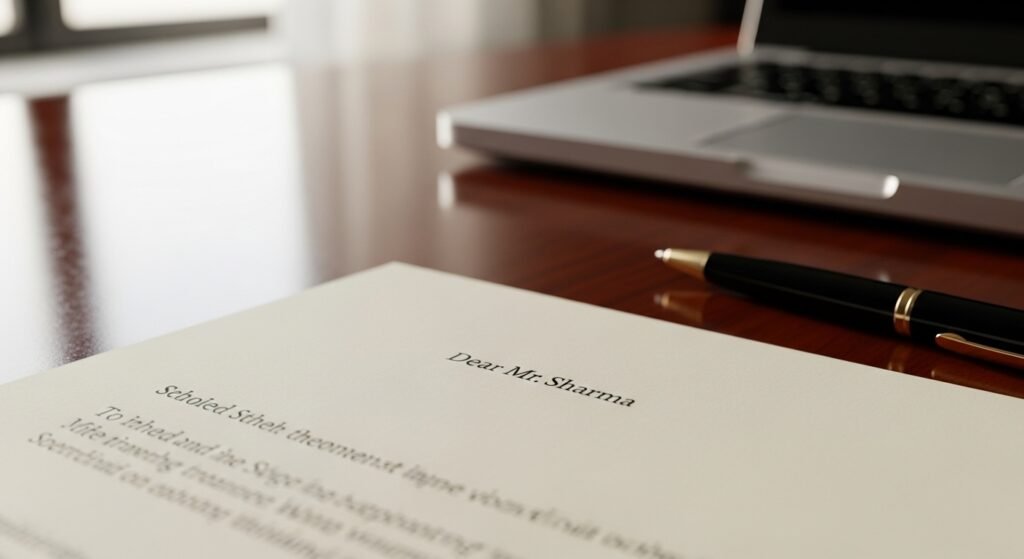
The salutes are polite to the recipient. Common examples are, dear Mr Sharma or dear Ms Rao. In case of an unknown name, a formal general greeting can be applied. Courtesy is used to introduce the message.
Subject Line

The letter has a subject line that outlines the intention of the letter in a short statement. It comes ahead of the main body. This sentence makes the reader gain insight into the subject matter fast. Specificity is important to avoid confusion and wastage of time.
Opening Paragraph

The introduction paragraph presents the cause of writing. It is needed to be straightforward and to the point. Avoid unnecessary details. Make the purpose straightforward so that the recipient gets to know the intention of the letter immediately.
Main Body

The content body clarifies the message. A paragraph is supposed to be dedicated to a single idea. Be concise and precise with sentences. Logical flow is important. Tangents can water down the message that you have.
Closing Paragraph

The key point is summarised in the final paragraph. It can consist of a call to action or a request for a response. Often, appreciation of the time of the reader is mentioned. The conclusion should be satisfactory and considerate.
Complimentary Close
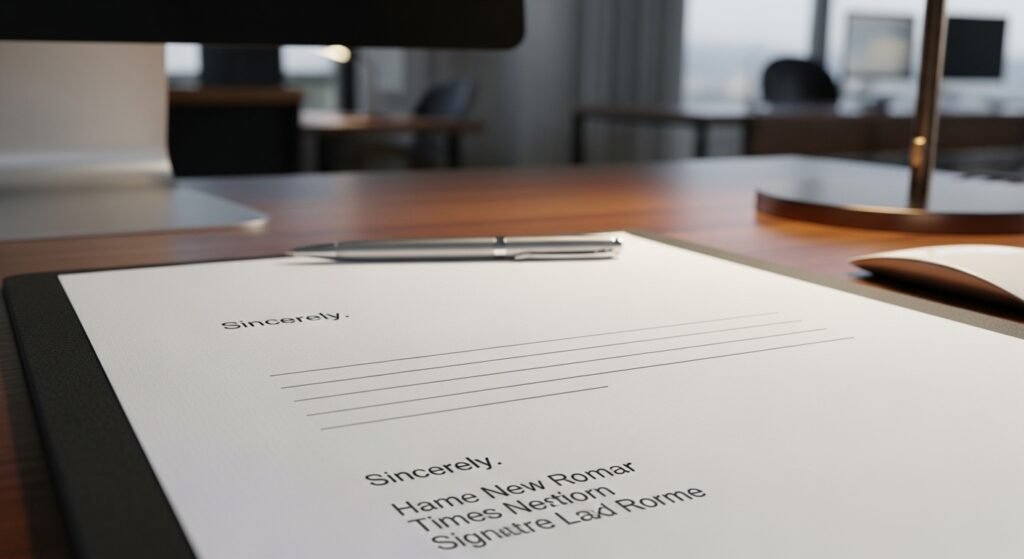
After the closing paragraph, the free offer is mentioned. The most typical examples are Sincerely or Regards. It is formal and respectful. The selected phrase ought to comply with the tone of the letter.
Signature

Printed letters have the typed name with a handwritten signature on top of the typed name. A scanned signature can be employed in digital letters. This aspect assures genuineness and responsibility on the part of the sender.
Enclosures and Copy Notation
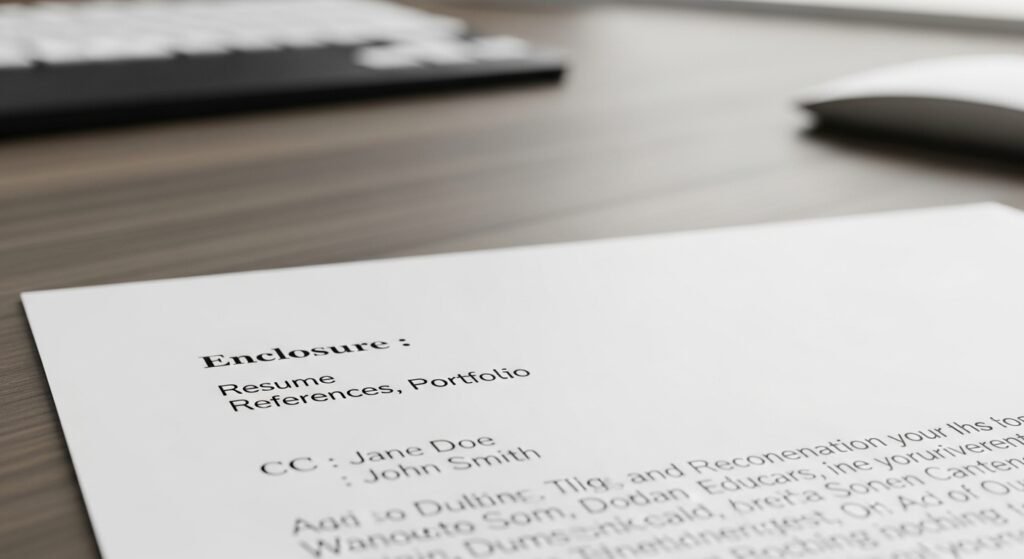
In case of document attachments, they are indicated at the bottom. Enclosure may be typed in, and then the name of the document must be typed. When the copies are sent to other people, the word CC is featured. Transparency is relevant in official communication.
