
The last couple of years have seen the “work from home” revolution abide, and suddenly Gen Z has brought about an unexpected trend back to the office. The youngest generation in the workforce thinks of isolation as a barrier to growth rather than a benefit arising from remote work. This change in physical surroundings transformed the idea of a workplace from only a place to be into a place one would rather be. The generational cohort takes into account all purposes: past, present, and future.
Passive Mentorship

Gen Z believes they are missing out on some learning experiences while they’re ever doing work from home. In the office, they can sit and watch how a senior manager interacts with an upset client or how a project is pitched. All that learning via doing is practically useless while strapped to Zoom. So much training happens on the job-or in the office for freshers like them -that for all practical purposes, it cannot happen in an online meeting.
The Away from the Office, Back to the Office

Many young professionals basically began their career from home in their bedroom or shared apartment during the pandemic. Just the same, it provides a critical social anchor for them. So-called watercooler talk, which used to distract so many from my age and older, is, for Gen Z, a means for establishing that sense of belonging and community that a Slack channel can never replicate.
Sharper Defined Boundaries Between Life and Work

If your bed is the desk, the work day never ends. Gen Z focuses on mental health by using the office as a physical boundary. Leaving the office at 5:00 PM allows the mental shut-off which is much harder when the laptop sees you every day on your kitchen table.
Visibility and Promotion

Grasping the notion of “proximity bias” wherein people seen working in close proximity to and by managers are the ones who are being promoted. Gen Z knows that being in the room where decision-makers are congregating keeps them “top of mind” for the next opportunity and salary increase.
The Office as a “Collaborative Hub”

It’s far removed from sitting alone in a cubicle and working. Gen Z sees the office as a brainstorming and workshop place for team building. They do work, of course, if it’s something they can do individually at home. But, if it needs interaction and creativity, they will head straight to the office.
Demand for So-called “High-End” Workspaces
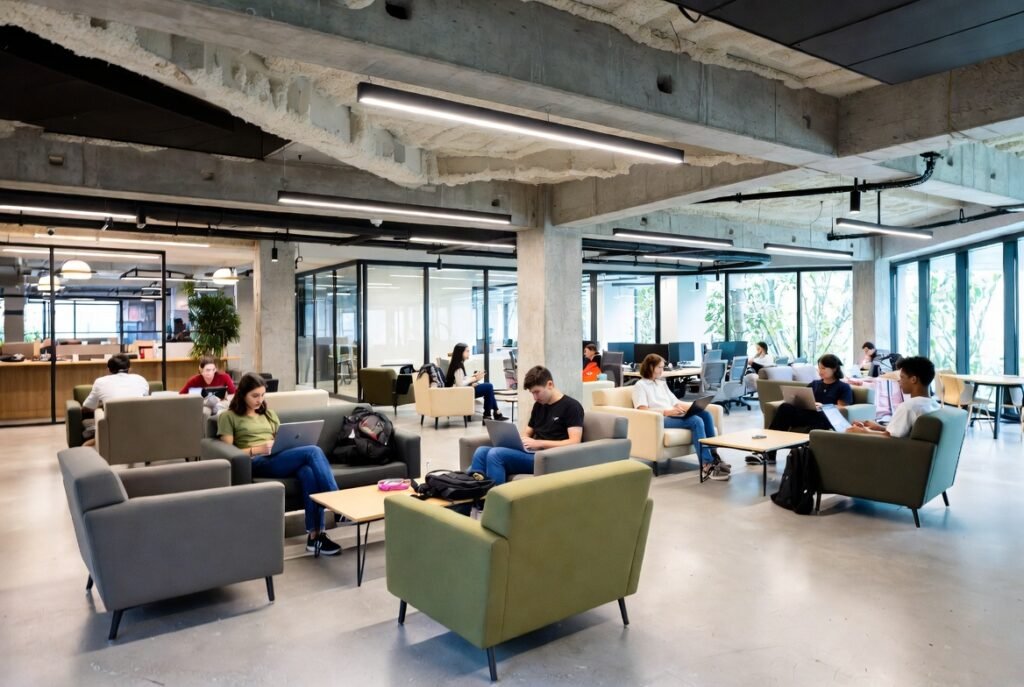
Gen Z pressed companies to change their workspaces. They love the office as a social and creative place. It should include lounges, nice coffee, and wellness rooms. Instead of the dreary grey office, the talk has shifted to one that feels like a vibrant kind of hospitality.
Striking the Balance of Structured Hybrid

What Gen Z wants is not a full office for five days a week. Nor do they want 0. They want structured hybrid modes, coming to the office with the entire team on set days-Tuesday to Thursday kind of thing. This way, they are assured that their coworkers would be available to catch up with them when they require it.
A new approach toward onboarding and integration, faster

Starting a job remotely can be frightfully intimidating and confusing, but the fact that Gen Z new hires can go into the office means that there are far fewer questions so that they can swiftly integrate into the team within days, not months.
A New Management Style

Managers will have to forgo timekeeping and, instead, start to build relationships if they actually want to engage with Gen Z. This conversion of the office from mere overhead to coaching and feedback develops an empathetic communication-centered culture.
