
If your ears itch, turn red, and swell when you wear earrings for some time, you are likely having a case of metal dermatitis, the usual culprit being nickel, a cheap, hypoallergenic metal very likely used as the hallmark in the offending piece of jewelry. Finding biocompatible materials with skin-friendly activity has practically become the last frontier of fashion for those with sensitive skins.
Here are nine of the best possible earring materials for sensitive ears:
Medical-Grade Titanium
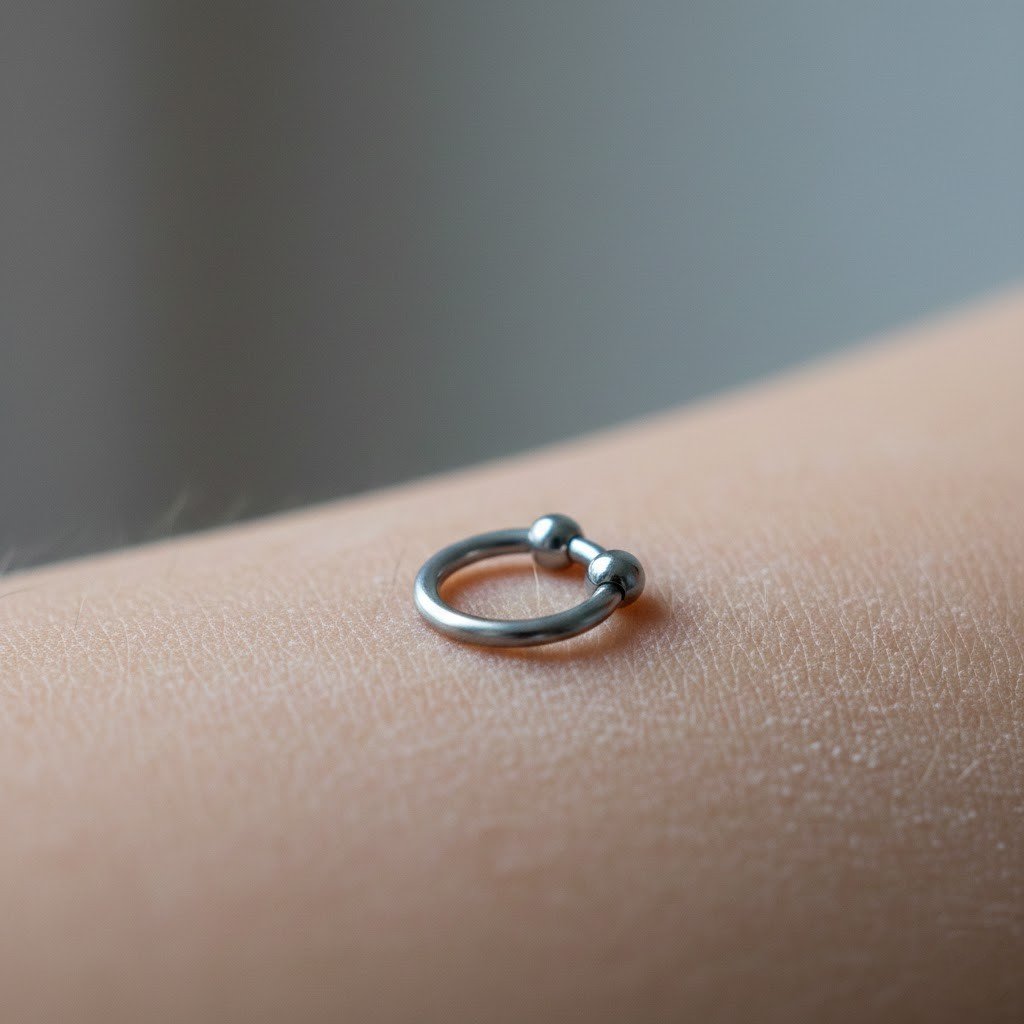
Titanium is often the metal of choice with sensitive ears and an excellent material for dental implants and artificial joints, neither of which enthuse the body. Superbly strong yet lightweight and completely nickel-free, if one finds their “angry” piercings just refusing to heal, then titanium is often the next metal recommended.
316L Surgical Stainless Steel
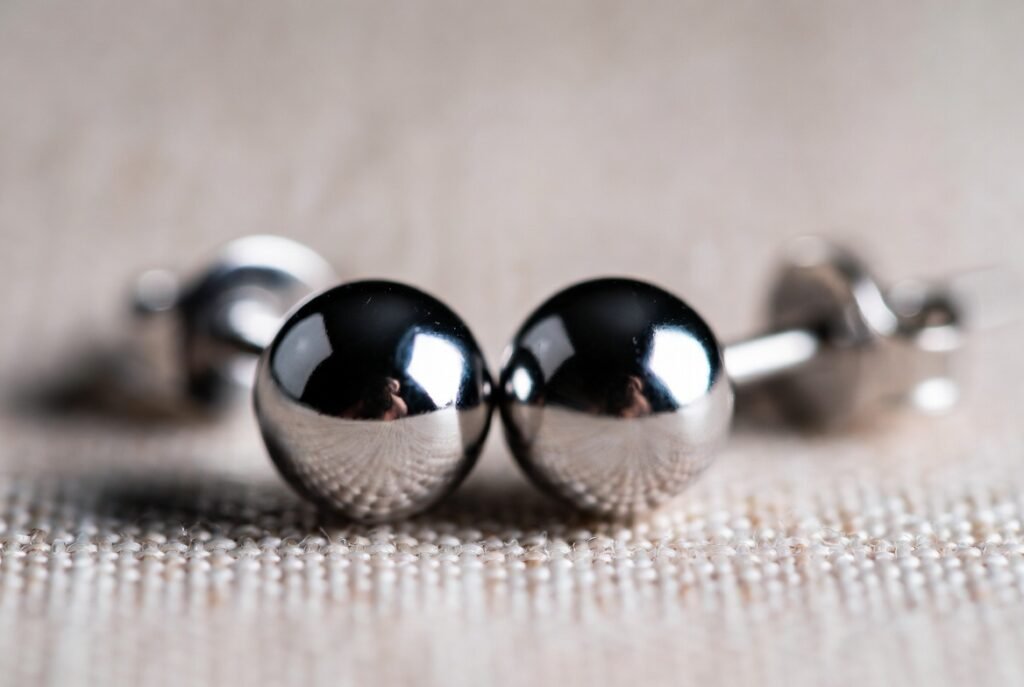
The majority of people find success with surgical stainless steel. It is manufactured to have maximum resistance to corrosion and is often utilized in a medical setting. Beware though, some of the cheaper “surgical” steel options still carry a bit of nickel. Your biggest assurance is to look for one with 316L or 316VM grade.
14K Gold and Up
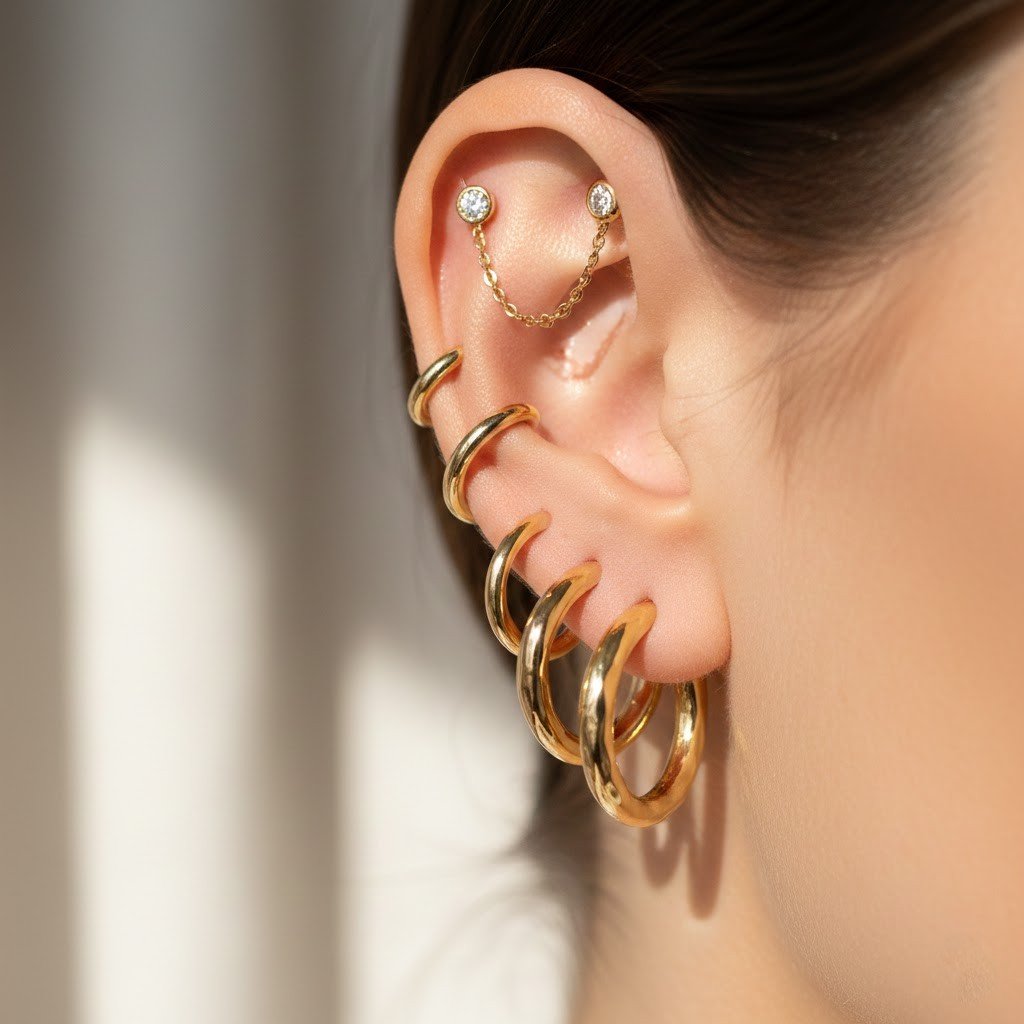
Gold is naturally hypoallergenic, but those exceptions lie in the wannabe pure gold. Cheap so-called “gold” jewelry will often have a nickel base layer beneath the gold, which will eventually leach through and irritate the skin. To play safe, go for solid 14K or 18K gold. Just avoid 10K gold, which has more irritating base metals in the alloy.
Niobium
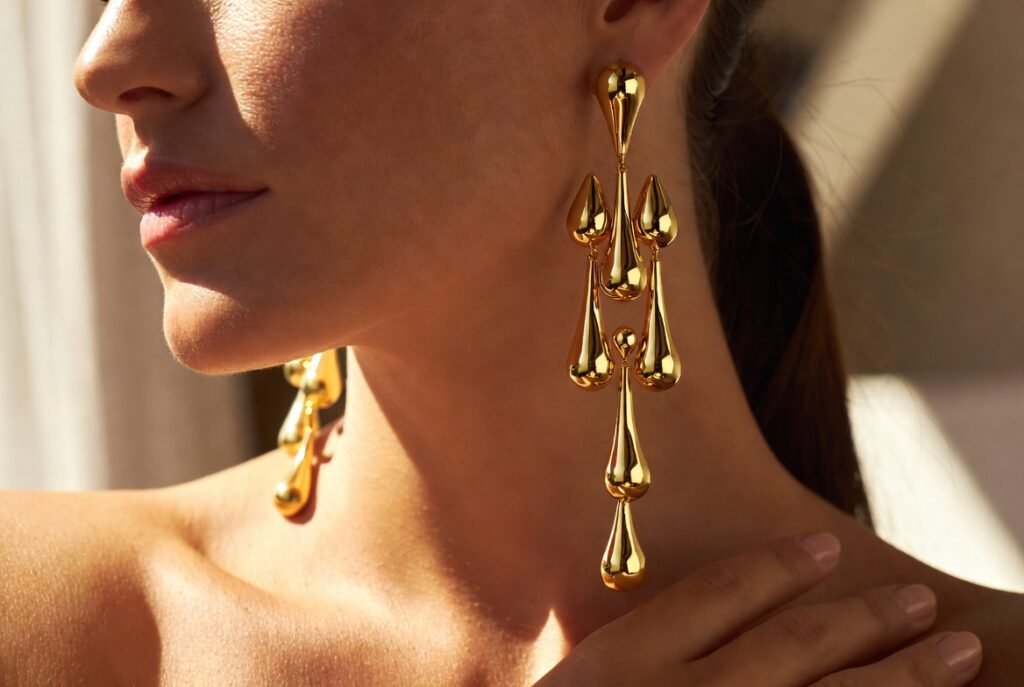
Niobium is not an alloy; it is an elemental metal that is just as well neither mixed with often irritating metals such as nickel or lead. It is quite resistant to corrosion and can be anodized to create a number of bright colors without any toxic dyes. It’s a great and less expensive alternative for all those who find gold to be mildly irritating.
Platinum
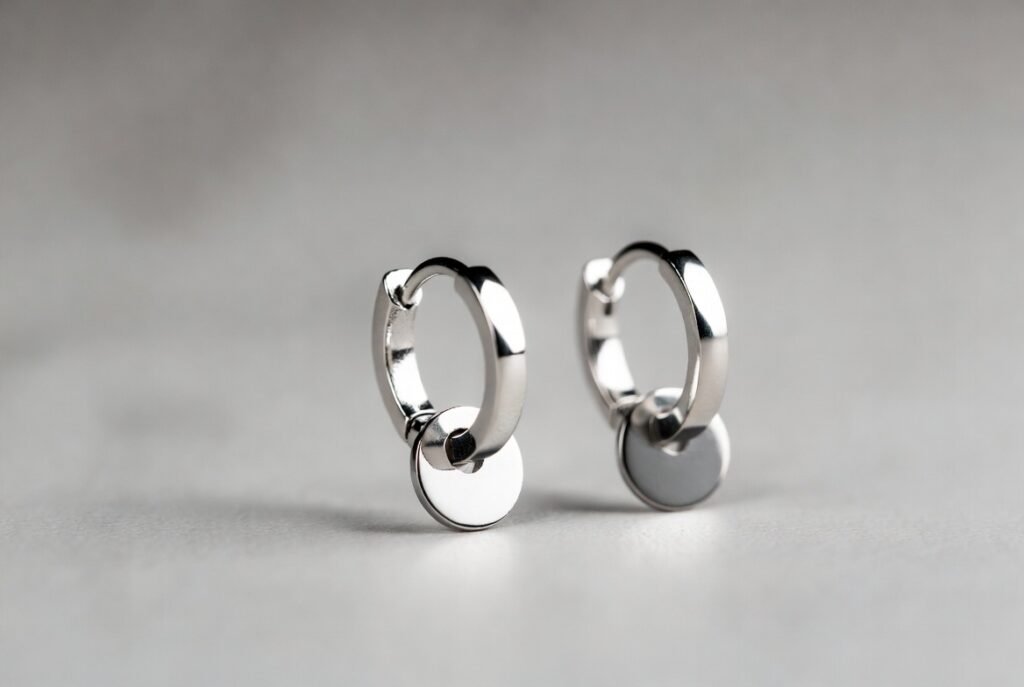
Platinum is supposedly one of the stable and purest metals found on the Earth. Jewelry made of platinum is, however, 90-95% pure, meaning there is very little room for allergenic fillers. While expensive and much heavier than other alternatives, platinum remains a forever choice for those extremely sensitive, with its durability and biocompatibility.
Sterling Silver Beware
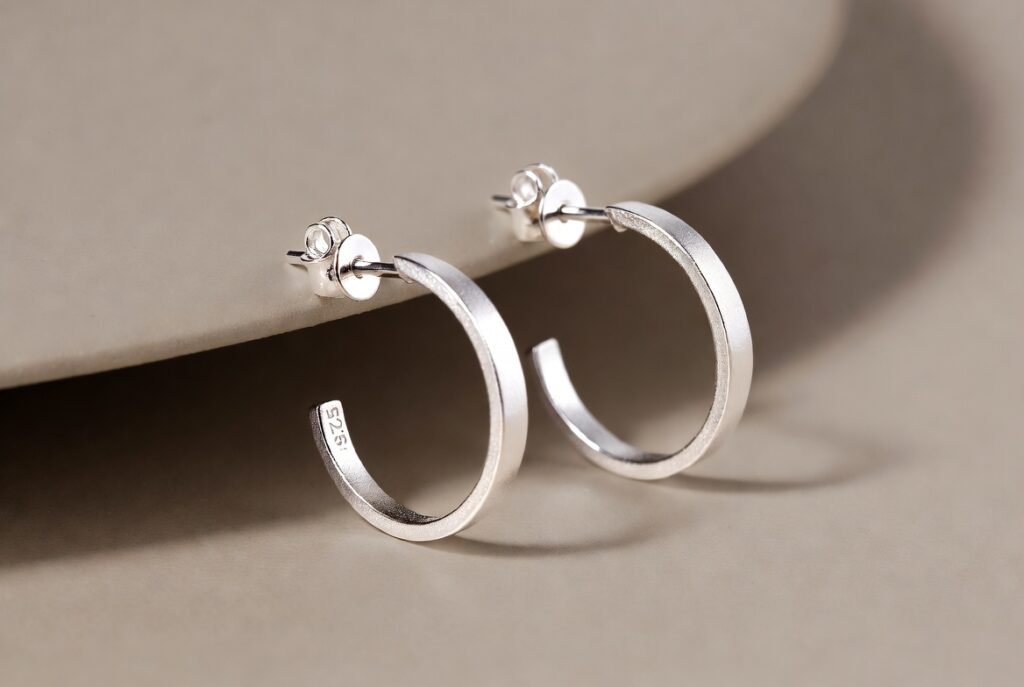
Sterling silver, so-called first grade, ought to be marked .925, denoting that it is 92.5 percent pure silver. The remaining 7.5 percent is mainly copper, and should be safe for most. Some manufacturers, however, may use nickel instead. It is therefore wise to opt for “nickel-free sterling silver” so that you do not react to the silver that naturally tarnishes.
Argentium Silver
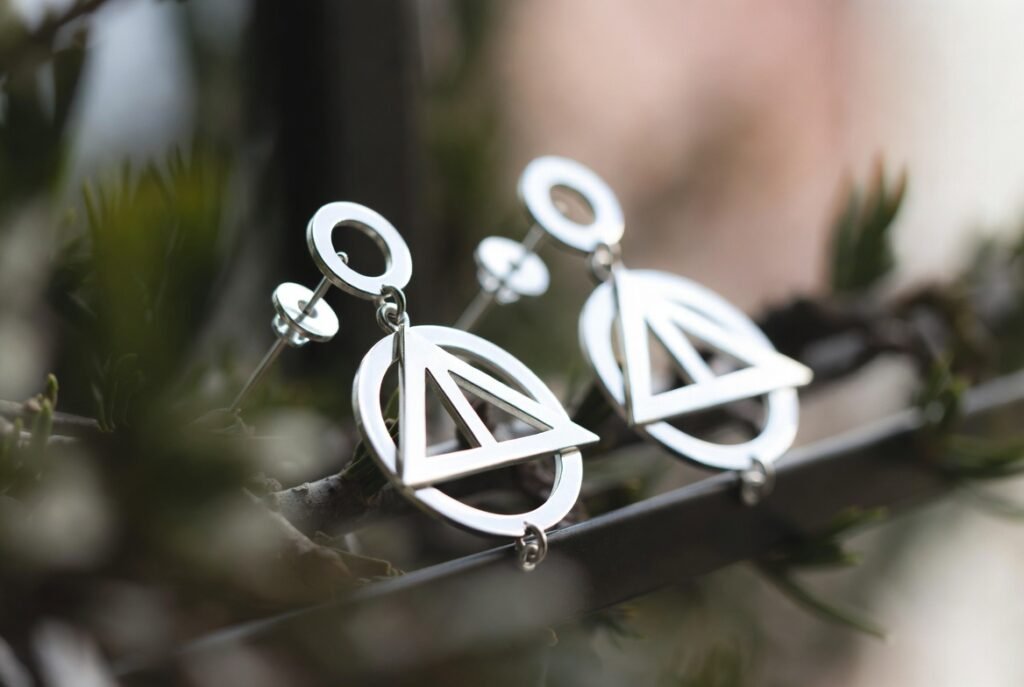
A “new” form of sterling silver was developed by substituting some of the copper alloy with germanium, which makes these earrings a lot more hypoallergenic and resistant to tarnishing. It’s a nice compromise for people who love the look of silver but can’t stand the “itch” of the traditional alloys.
Bioplastic and Teflon
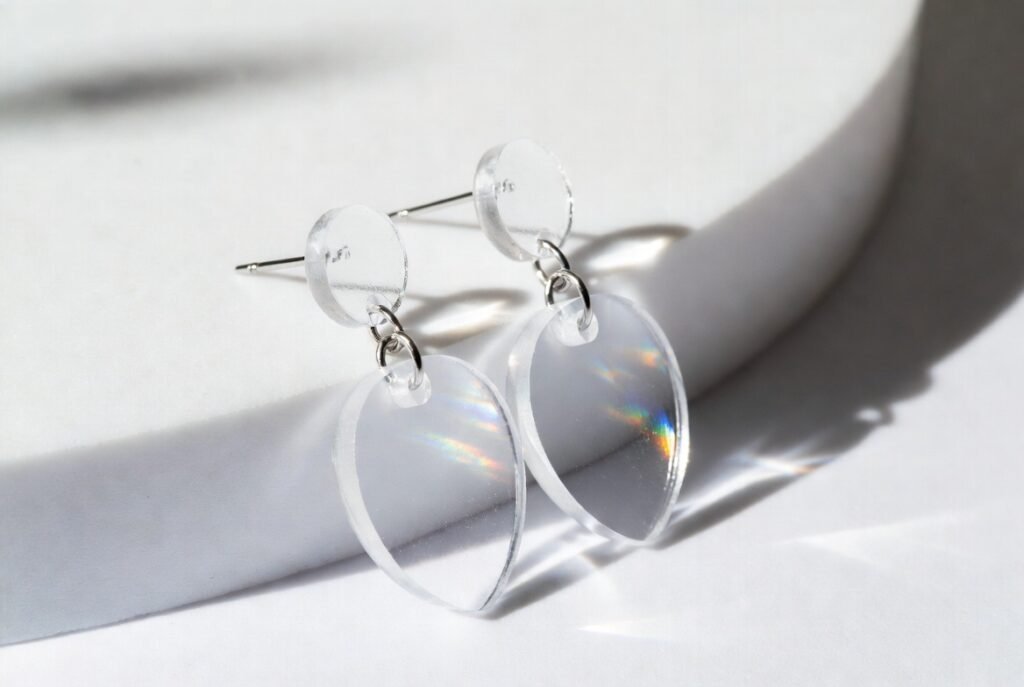
If you have an allergic reaction to any sort of metals, bioplastic or medical-grade plastic can be a rescuer. These flexible, lightweight materials are entirely non-metal. Their most common use is during the first piercing or as “retainers,” because the body will not recognize them as a threat in a foreign sense and would, therefore, ease during the healing process.
Rhodium-Plated Jewelry
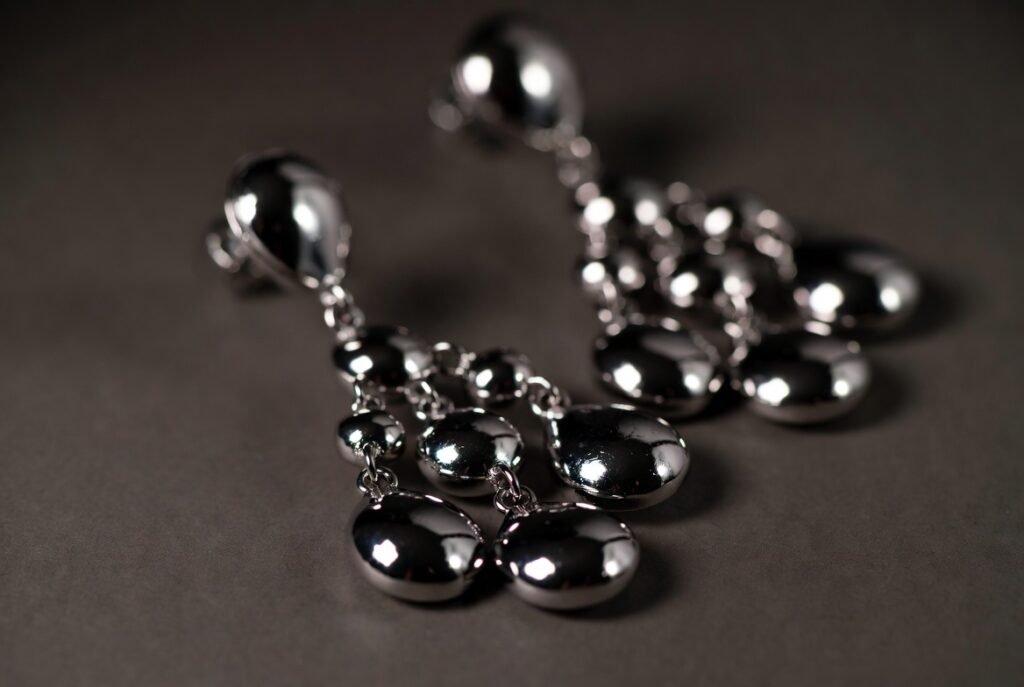
Rhodium comes from a family of metals along with platinum rare, precious, and shiny to the utmost. It never tarnishes. Expensive “white gold” earrings or silver are generally rhodium plated, providing a protective barrier between your jewelry and skin. Until the plating lasts, your ears will stay happy.
