
The process of running multiple businesses appears thrilling, but it becomes unmanageable when operators fail to execute effective time management practices. The successful entrepreneurs succeed through their ability to control time instead of working longer hours. Systems together with priorities and intelligent delegation constitute the main solution to this problem. Studies show that productivity increases when focus and structure are applied correctly. Here are 10 detailed, practical ways (with real insights and statistics) to manage time effectively across multiple businesses.
Focus on High-Impact Tasks

The Pareto Principle (80/20 rule) states that 80 percent of outcomes stem from 20 percent of work activities. The business needs you to direct your efforts toward activities that immediately produce profits and lead to business expansion. The process leads to improved operational efficiency because it eliminates unproductive time.
Time Blocking Improves Productivity

Research shows that time blocking can improve productivity by up to 50%. Business operations need dedicated time slots which should not be combined with other activities. The schedule should divide the day into two business segments which include morning work for one business and evening work for another.
Avoid Multitasking (It Reduces Efficiency)

The research shows that people who multitask lose as much as 40 percent of their work output. The need for business owners to manage their multiple enterprises implies that they must follow recent operational developments. The most effective approach to work requires you to dedicate your attention toward completing one task until you finish it.
Build Systems and Processes
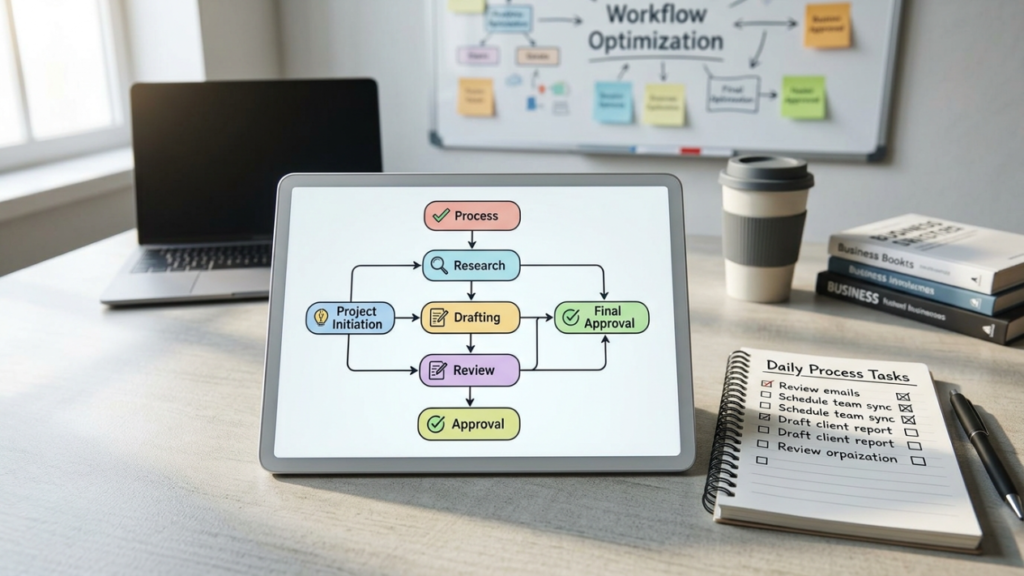
Businesses operate efficiently because their procedures exist in written form. Standard operating procedures (SOPs) establish guidelines which decrease decision-making work while they enhance work efficiency. You need this system because it helps you manage your business growth without getting stuck in everyday tasks.
Delegate and Outsource Early

Another report suggests that businesses achieve a productivity gain between 20-30 percent through successful delegation. The process of bringing in freelancers or team members to handle your routine tasks enables you to concentrate on your strategic decision-making activities.
Use Automation Tools

The application of automation tools for emails and marketing tasks and operational work processes permits users to achieve time savings between 10 and 15 hours each week. The combination of post scheduling and response automation and CRM system implementation leads to reduced manual work requirements.
Limit Decision Fatigue

The process of making decisions creates more efficient work performance. The process of decision making in daily life can be reduced through the implementation of simple schedule patterns and task scheduling and system establishment. This method enables you to stay focused on different projects.
Track Time and Analyze It

Time tracking reveals where your hours actually go. Many entrepreneurs find they waste 1–2 hours daily on low-value tasks. The identification of this information enables optimal schedule creation.
Maintain Energy, Not Just Time

The energy level of a person determines their ability to work productively. The research demonstrates that people achieve their best performance after working for 90 minutes without interruption. The practice of taking brief breaks throughout the day enables people to maintain their work efficiency.
