
When filling a new role in a startup, more than skills and experience are to be considered. In fast-paced businesses, staff members frequently have to do a lot of versatility in roles, adjust to changing priorities, and collaborate with smaller teams. Great-looking candidates will be rejected if they are not a good match for the company’s culture and working style. These methods are useful for founders to consider when screening candidates to find individuals who will be better suited to their startup company.
Ask About Unclear Situations

Ask candidates to describe a time they faced uncertainty and how they handled it. They will demonstrate their comfort level in making decisions on their own through their answer.
See How They Learn

In fast-growing businesses, staff members have to acquire new skills very rapidly. Questions regarding the process of learning, solving novel problems, and keeping up to date with the subject can be helpful.
Discuss Past Failures

Everyone experiences setbacks. When candidates discuss failures they’ve experienced and how they grew from them, it can give insight into self-awareness, accountability, and resilience.
Share Real Startup Challenges
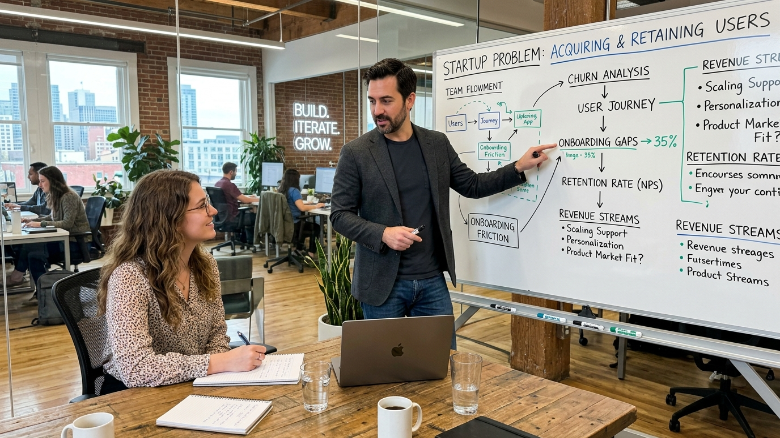
For example, do not just include the usual interview questions; come up with a realistic business problem that your company may have faced. This can be useful to assess problem-solving and communication skills in real-world scenarios.
Look for Ownership Mentality

Strong startup employees often take initiative rather than waiting for instructions. Ask for examples of situations where candidates identified a problem and acted without being told to do so.
Evaluate Communication Style

Small teams depend heavily on communication. Pay attention to how clearly candidates explain ideas, ask questions, and engage in conversation throughout the interview process.
Understand Their Motivation

Different people are motivated by different factors. When you explore why a candidate is trying to join a startup, it can help figure out whether their expectations really sync with the realities of the role, in a practical sense.
Test Adaptability

As startups get bigger, they tend to alter their paths. An interview with the candidate could be used to check for flexibility with regard to shifting priorities, changing responsibilities, or unforeseen issues.
Include Team Interactions

Allowing candidates to meet future colleagues can give them different insights. The dynamics between team members can sometimes be apparent during a normal interview, but are more likely to be seen during a team interview.
Question if They’re Not a Fit

The most telling question is to ask candidates if they think they will struggle in the position or company setting. The truthful responses give information on self-knowledge and expectations.
